All Posts By

EuroHealthNet

Windows of a building with plants on the wall

18 September: UBDPolicy Workshop – Global, Regional, or Local ERF Exposure–Response Functions in Health Impact Assessments

By Events

18 September 2026, 13:00-17:00 CEST

This online workshop organised by the EU-funded UBDpolicy project aims to discuss how to select exposure–response functions (ERFs) at global, regional, and local scales in health impact assessment (HIA), integrating methodological evidence with policy needs.

ERFs are a core component of HIAs, yet their application across different spatial scales remains inconsistent and insufficiently discussed. This workshop will bring together experts to discuss methodological approaches, empirical evidence, and policy considerations for selecting ERFs for environmental exposures such as air pollution and temperature. The goal is to move toward practical guidance for choosing appropriate ERFs in different decision-making contexts.

Organisers: Xuan Chen, Gerard Hoek, Ulrike Gehring (Utrecht University) on behalf of the UBDpolicy project team

Key questions

  • How should ERFs be selected for different policy contexts, such as city-level interventions, national regulations, or global burden assessments?  What approaches can be used when local or regional evidence is limited?
  • Under which conditions are global ERFs sufficient, and when are regional or local estimates more appropriate? How should differences in population characteristics, exposure composition, and local conditions be accounted for in ERF selection?

Register here

Programme

Section 1: Background and Framing the Core Question

  • 13:00-13:10 Opening and Introduction (5-10 mins) Speaker: Ulrike Gehring
  • 13:10–13:35  Introduction to Global vs Regional ERFs (15 mins presentation followed by 10 mins discussion) Speaker: Francesco Forastiere

Section 2: ERFs for Short-Term Exposure

  • 13:35–14:00 Temperature and Methodological Advances (15 mins presentation followed by 10 mins discussion) Speaker: Pierre Masselot

Section 3: ERFs for Long-Term Exposure

  • 14:00–14:25 Long-Term Air Pollution Exposure – Current Evidence (15 mins presentation followed by 10 mins discussion) Speaker: Evi Samoli

Section 4: Source-Specific Exposure, Local Perspectives, Heterogeneity and Policy Application

  • 14:25–14:50 Traffic-Related Air Pollution (15 mins presentation followed by 10 mins discussion) Speaker: Hanna Boogaard

14:50-15:00 Coffee Break

  • 15:00–15:25 Heterogeneity in Exposure–Response Functions (15 mins presentation followed by 10 mins discussion) Speaker: Duncan Lee
  • 15:25–15:50 Policy Perspective – European HIA (15 mins presentation followed by 10 mins discussion) Speaker: Barbara Hoffmann

15:50–16:20 General Discussion All speakers and participants

16:20–16:30  Closing remarks Speaker: Gerard Hoek

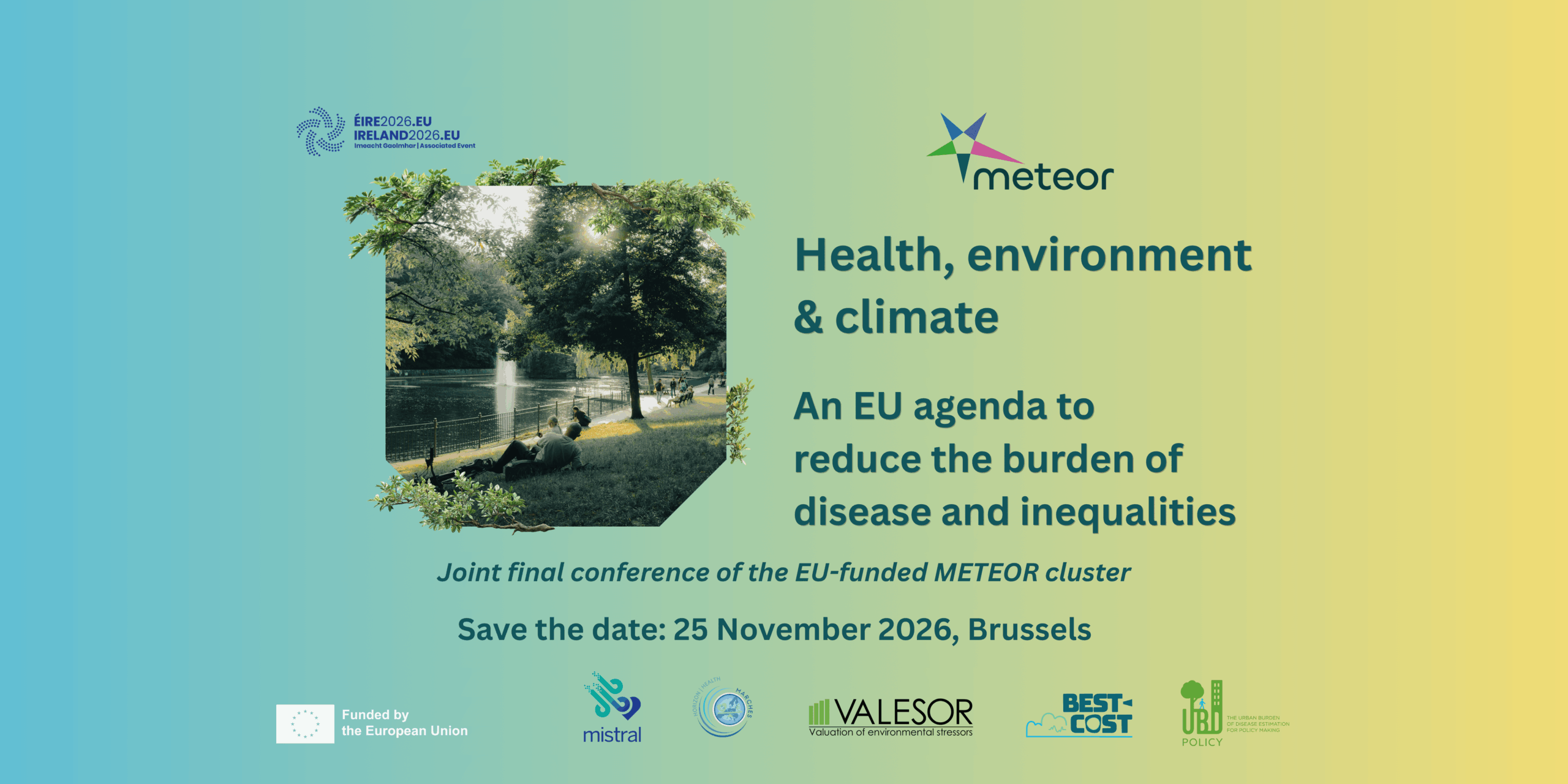
25 November: METEOR conference on Health, Environment, Climate: an EU agenda to reduce the burden of disease and inequalities

By Events

25 November 2026, Residence Palace, Brussels and livestreamed

The persistent and growing health burden from pollution and climate change is not only of concern for individuals and communities, but also for society at large.

As the top environmental threat to the health of people across Europe, air pollution leads to premature deaths and contributes to the aggravation of chronic ill-health including asthma or other respiratory diseases. But the impacts from pollution are not felt equally, with those living close to busy roads in cities, or citizens in Eastern European member states facing a higher risk. The EU Midterm review of the Zero Pollution Plan’s progress underlines that a clean environment is also key for a competitive and sustainable economy, for instance productivity losses from pollution exposure.

Join us on 25 November to explore how we can reduce the health and societal costs of environmental stressors.

Register to join in-person

Register to join online

This high-level conference will bring together EU, national and local policy-makers, scientists, health experts and civil society organisations to present the latest evidence on the health costs of pollution and discuss the way forward for an EU 2030 agenda which invests in people’s health, reduces disease cost, and lessens inequalities. As part of our exciting agenda, speakers will include:

  • Leena Ylä-Mononen, Executive Director, European Environment Agency
  • Sir Andy Haines, Professor of Environmental Change and Public Health, London School of Hygiene & Tropical Medicine & Chief Scientist of the WHO Pan-European Commission on Climate and Health
  • Veronica Manfredi, Director, DG Environment
  • Robb Butler, Professor at the London School of Economics and WHO Special Representative for Climate and Health
  • Frank Siebern-Thomas, Heat of Unit Green Transition, DG EMPL
  • Karen Vancluysen, Secretary General, POLIS
  • Suzanne Costello, CEO All Island Institute of Public Health, Ireland

The conference is recognised as an Associated Presidency Event as part of the Irish Presidency of the Council of the European Union 2026.

The conference is organised by the BEST-COST and UBDPolicy research projects, together with their partners in the METEOR cluster. This EU Horizon research cluster has made significant advances in assessing the health cost of the environmental disease burden. The conference will spotlight key outcomes as well as policy recommendations from the projects to protect our health and the planet.

A full agenda will be shared soon.

Join us on 25 November to share your perspective on green, zero-pollution and healthy living environments!


MARCHES 4th Annual Meeting

By News

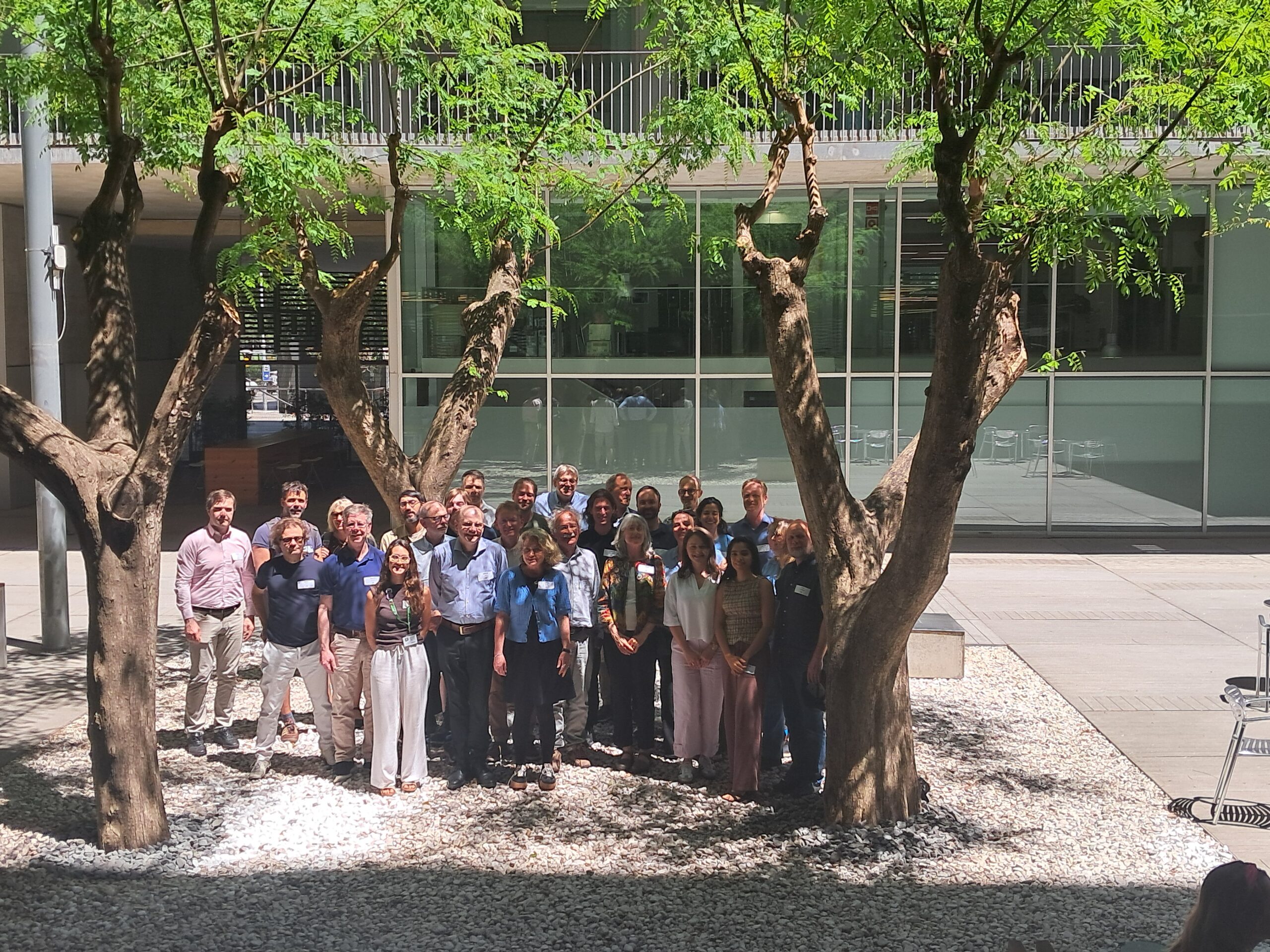
The 4th Annual MARCHES Project Meeting took place on 27–28 May at PRBB in Barcelona, bringing together partners from across Europe for two days of scientific exchange and collaboration, marking a productive milestone in the final phase of the project.

The agenda included the latest updates from the project: covering health-related quality of life studies, health impact assessments, EVA unit prices for air pollution, data management, and policy communication activities. Several case studies were presented on air quality and drinking water across different European regions, alongside discussions on the costs of inaction and action.

The second day also included a session with the Scientific Advisory Board, providing strategic feedback and discussion on methodological approaches, modelling assumptions, and future implementation.

The MARCHES project is part of the METEOR cluster and is now in its final year. This meeting marked the last consortium gathering before the final event, which will take place in Brussels in November.

Follow the project by visiting the website.

MISTRAL: Second newsletter out now

By News

MISTRAL is developing an innovative digital tool to better understand how environmental, social, and health factors affect people’s wellbeing in cities.

By combining different types of data — including health records, environmental measurements, and socioeconomic information — the project creates a comprehensive picture of how pollution and living conditions impact quality of life.

Read the second edition of their newsletter to learn more about their recent activities, including its stakeholder recommendations on AI for just health, an article on how long-term exposure to industrial pollution in Taranto (Italy) has shaped the experiences and perceptions of different generations, and its upcoming annual meeting on innovation to policy.

People smiling and pointing to a rock in a water stream in the park

VALESOR: Latest newsletter out now

By News

The final VALESOR newsletter is out now. In this edition, you can read about the project’s key achievements, including contributions to international conferences, progress in case study work, the submission of final deliverables, and the preparation of policy briefs intended to support evidence-based environmental health decision-making in Europe.

Read the newsletter here.

View of tree tops from the bottom

VALESOR project concludes: Driving Innovation in Health Cost Assessment Across Europe

By News

As outcomes of 3 years of intense EU collaborative research, VALESOR project is delivering concrete results that will shape how Europe assesses the economic impacts of pollution on health. These outcomes are expected to provide policymakers with lasting tools that support the EU’s zero pollution goals and ensure future environmental policies generate measurable public health benefits.

A central area within the VALESOR project has assessed the health burden linked to chemical pollution exposure and demonstrating how improved regulation can yield significant social and economic gains. As part of the METEOR cluster active in the same research field, VALESOR project has played a pivotal role in this European effort to strengthen policymaking through evidence-based economic valuation. The importance of VALESOR’s contributions lies in harmonising valuation methods that support EU-wide zero pollution ambitions and public health strategies. There is a growing demand across Europe for reliable valuation tools and long-term health impact assessments – a core focus of VALESOR within the METEOR cluster, driving the development of evidence-based solutions for future environmental health policy.

Building collaborative sessions held in different stakeholder workshops and policy sessions held in renowned international conferences like EAERE, SBCA and EPHEC, VALESOR developed an innovative on-line tool building on most recent research. The VALESOR tool is designed to assess health effects and the corresponding economic damage of planned variations in chemical stressors (CHEM module) and air pollution (AIR module). The tool operates with emission reduction scenarios and for each scenario provides users with a set of outputs such as the effects on health (decreased mortality, morbidity) and the expected benefits associated to these effects. The tool allows users to easily test several valuation methods, adjust values of key parameters and directly see changes in the results. VALESOR’s potential users are policymakers, scientists, academia, NGOs – the tool is meant to support their research and decision-making procedures by providing scientific basis for health impact assessments and Cost-Benefit analyses.

A guidance document addressed at stakeholders links the methods developed in the VALESOR project with the VALESOR tools. It provides introductory information on the role and the methods of economic valuation of health impacts from atmospheric pollution and chemical substances and then focusses on guidelines for the quantification and economic valuation of health effects caused by environmental stressors. In this it takes a specific view on the approaches developed and decision made in the development of the VALESOR tool. The guidelines developed are relevant both for Environmental Burden of Disease (EBD), assessing the health burden (costs) for given pollution exposure levels, and Health Impact Analysis (HIA), quantifying the changes in health damage. Both are supported by VALESOR tools. Guidance is adapted, where relevant, to the classical air pollutants on the one hand, and chemical substances on the other hand. Guidelines are also specific to the two valuation approaches relying on the estimation of cases of health impacts (mortality and morbidity) as well as approaches relying on the estimation of quality-adjusted life years (QALY). This more method-oriented guidance report is complemented by tool user guidance explaining the users which data to provide and choices to make in the tools in which order.

For all these reasons, VALESOR is generating strong interest from policymakers and stakeholders across Europe, who are preparing to use its tools to drive healthier communities, more effective regulations and long-term economic gains. Final results will be presented in a final event of the METEOR cluster in Brussels end 2026. More information is available in the upcoming METEOR newsletter.

Contact:
Gildas Appéré Valesor Scientific coordinator

Email: gildas.appere@univ-angers.fr

Bicycle in front of a building

UBDPolicy: New policy brief on collaborating for healthy and sustainable cities

By News

Urban environmental, climate, and social conditions are major factors for residents’ health and well-being. Air pollution, noise, temperature/heat, lack of green space, physical activity, and socioeconomic status affect health. In recent years, residents have become more aware of the environmental and climate
conditions in their cities. A clean urban environment is now a key factor in a city’s attractiveness.

The new policy briefing from UBDPolicy provides an overview of the key city networks active in the EU and how the EU Agenda for Cities aims to enhance collaboration between the urban, national, and EU levels. It also shows local authorities where to find good practice examples and provides them with science to policy recommendations, for both city- and EU-level decision makers.

The briefing is available in: BulgarianDutchEnglishFrenchPolish and Spanish.

Sixth BEST-COST newsletter out now

By News

The Winter 2025 edition of the BEST-COST newsletter looks at the launch of its healthiar R Package and factsheet on socioeconomic equalities, as tools for researchers and policymakers in understanding the health costs of pollution. Progress is also made on the cost monetisation work, including through workshops and the first European Public Health Economics Conference. The newsletter also provides updates on the latest scientific publications from BEST-COST researchers.

Read the newsletter here.